
Veneers are a significant cosmetic decision, so if you are researching them, this question probably sits near the top of your list: do porcelain veneers stain the way natural teeth do? It is a fair thing to check, particularly if you are a daily coffee drinker and want your porcelain veneers to hold their colour for the long haul.
In short, porcelain sits among the most stain-resistant materials in cosmetic dentistry, holding its colour far better than natural enamel. Stain-proof is a stretch, though, and a few things can still influence how a veneer looks as time goes on. This guide walks through what the research shows, what makes porcelain resist stains, and how to care for porcelain veneers so you can keep your veneers looking natural.
Quick Overview
- Porcelain’s glazed, non-porous surface shrugs off stains far better than natural teeth or composite veneers.
- It is not fully stain-proof: the bonded edges and the real teeth around a veneer can still change colour over time.
- A veneer’s shade is locked in when it is made and cannot be whitened later, so badly discoloured ones are replaced rather than bleached.
- Consistent home cleaning and routine professional visits are a dependable way to avoid staining and keep veneers looking natural.
Below, we look at the evidence, the materials, and the everyday care that makes the difference.
Do porcelain veneers stain?
Porcelain veneers are highly resistant to staining, which is a big part of why they are such a popular choice for improving the front surface of a tooth. Rather than soaking up colour the way porous natural enamel does, the glazed ceramic surface keeps most staining substances on the outside, where normal brushing lifts them away.
That said, highly resistant is not the same as stain-proof. In one laboratory study, dental ceramics immersed in coffee did show a small colour change, but it stayed within clinically acceptable limits. In everyday terms, that means a well-cared-for porcelain veneer holds its colour very well, while extreme or long-term exposure to strong staining agents can still have a slight effect. For you, that is the difference between a veneer that quietly keeps its shade and natural teeth that visibly darken over the same period. So porcelain resists stains impressively, without being completely immune to them.
What makes porcelain so stain-resistant?
It all comes back to the surface texture. Dental veneers are thin, custom-made shells bonded over the front of prepared teeth, and the porcelain kind is fired and glazed into a hard, non-porous material, leaving almost no gaps for pigment to lodge in.
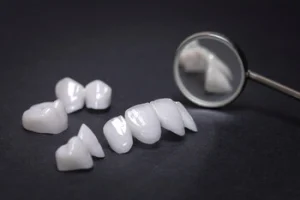 Your own teeth work the other way. Enamel is riddled with microscopic pores, so year after year of foods and beverages slowly soak in and the teeth turn yellow. It is the same reason teeth whitening lifts stains from natural teeth yet does nothing for a veneer: bleach needs those pores to work, and a glazed porcelain face barely has any. Thanks to the modern materials behind them, veneers are made to keep their appearance and count as highly durable, in wear and in stain resistance alike.
A veneer is not a dental crown, which wraps the entire tooth; it faces only the front, though it still guards that surface against certain foods and drinks that discolour enamel. That sealed finish is also why porcelain holds its gloss instead of going dull and gathering surface stains the way a rougher material would. It can even mask misshapen teeth or a stubbornly discoloured tooth, delivering an even shade that natural whitening alone may never reach.
Do composite veneers stain more than porcelain?
So does the material actually change whether dental veneers stain? Quite a bit, and it is worth understanding if you are weighing porcelain against composite. Composite veneers, sometimes called composite resin veneers, are built up from a tooth-coloured composite resin rather than glazed ceramic.
The reason sits in the material itself. A resin surface is softer and more open than glazed ceramic, so composite draws in surface stains more easily and can lose its freshness within a few years, especially along the margins. That trade-off buys you some upsides, a gentler price and less filing away of natural tooth structure, but staying stain-free is where composite falls short. For someone who regularly has strongly coloured drinks, that weaker resistance to staining can be the deciding factor.
Porcelain, by contrast, tends to look the same years down the track, which is why it so often goes on the most visible teeth. Either way, your dentist can walk you through how each option ages so it fits your lifestyle, and individual results always vary.
Can a porcelain veneer ever change colour?
Porcelain holds its colour well, but a finished veneer is not only its ceramic shell, and a handful of factors can nudge its overall appearance as the years pass.
Start with the join. The bonding material that anchors the edge can slowly deepen in tone, sometimes surfacing as a faint discoloured line right at the gum, and if the gum creeps back even slightly, that seam or the tooth behind it becomes visible. At the same time, your untouched teeth keep ageing and taking on a colour of their own, so they can gradually drift away from the veneer’s shade. Here is the catch that surprises people: because a veneer’s colour cannot be changed once it has been made, there is no bleaching it back to a lighter tone. Home kits, and even professional whitening treatments, work on natural teeth alone, never on porcelain.
So a veneer changing colour is nearly always the seam or the neighbouring teeth rather than the ceramic, and light surface marks can usually be lifted with professional treatments such as a clean and polish. Where the porcelain itself has truly dulled, the veneers may need to be replaced, and composite ones tend to be replaced sooner than porcelain, with your new veneers shade-matched to the teeth beside them.
Caring for your veneers to avoid staining
Looking after veneers takes little more than looking after your own teeth well. A steady, consistent oral hygiene routine, plus a bit of proper care around what stains, keeps them cared for much like natural teeth and holds their colour for longer.
 Brush consistently, twice daily, with a non-abrasive toothpaste, and pair that regular brushing with flossing daily to stop plaque buildup gathering along the veneer margins, where discolouration usually begins. Cleaning your teeth regularly and continuing to maintain good oral hygiene habits keeps your gums healthy and gum disease in check, which in turn guards that delicate edge.
Cutting down on how often strongly staining substances such as coffee, tea and red wine pass your teeth helps, as does a quick water rinse afterwards; tobacco products are among the worst offenders, so easing off protects both the veneers and your oral health. Book regular dental check-ups too, where a professional cleaning clears accumulated surface stains and gives your dentist a chance to catch early dental issues. And steer clear of harsh, gritty products, since a scratched surface simply gives colour more to grab onto.
Thinking about veneers at Riverlands Dental
Veneers are meant to last, so it pays to understand how they wear and stain before committing. At Riverlands Dental, we go through whether porcelain or composite is the better fit for your teeth and daily habits, run you through the upkeep, and keep expectations grounded, because the right choice differs from one person to the next.
If you would like to explore whether veneers are suitable for you, please call us on (02) 4501 7930.
Frequently Asked Questions
How can I tell whether my veneer or my natural teeth have discoloured?
It can be tricky to tell at home, since a colour mismatch can come from either side. Often it is the surrounding natural teeth that have darkened rather than the veneer itself, as porcelain holds its colour well. A dentist can compare the shades and tell you whether the change is in the veneer, the bonding at its edge, or your own teeth.
Does smoking or vaping stain porcelain veneers?
Porcelain resists tobacco staining better than natural teeth, but heavy, long-term smoking can still dull the surface and stain the bonding at the edges over time. It also tends to discolour your surrounding natural teeth, which can make any mismatch more noticeable. Cutting back or quitting helps your veneers and your general oral health.
Can a dentist remove stains from a porcelain veneer?
In many cases, yes. A professional cleaning and polish can lift surface stains and refresh how a veneer looks, particularly around the edges. What a dentist cannot do is bleach or whiten the porcelain itself, so if the ceramic has genuinely changed colour, cleaning will not restore it, and replacement may be discussed.
If I only get veneers on my front teeth, will they still match the rest as they age?
Your veneers will hold their colour, but your other natural teeth will keep ageing and may gradually darken, so a mismatch can slowly appear over many years. Some patients choose to whiten their natural teeth before veneers are made, so everything starts from a similar shade. Your dentist can plan for this when matching the veneers.
Are porcelain veneers a good option if my teeth stain easily?
They can be, precisely because porcelain resists staining far better than natural enamel. If your natural teeth stain quickly from coffee, tea or red wine, porcelain veneers will not discolour in the same way, though the bonded edges and neighbouring teeth still benefit from good care. Your dentist can advise whether veneers suit your situation.
References
https://www.islhd.health.nsw.gov.au/sites/default/files/Health_Promotion/Live_Life_Well/how-to-brush.pdf
https://www.dhsv.org.au/oral-health-advice/by-topic/adults