
Do braces hurt? Braces usually cause some soreness, most often felt as a dull ache that builds over the first day and eases within about a week. Whether braces hurt is a valid concern before getting braces, and the answer changes with each stage of orthodontic treatment.
This guide explains why the discomfort happens, how long it tends to last after fitting and adjustments, and what you can do at home to minimise discomfort.
Quick Overview
- Braces move teeth by placing steady force on them, which triggers a short-lived inflammatory response in the tissue that holds each tooth in place.
- Soreness usually starts within hours of fitting, peaks around the following day and fades over the first week.
- Discomfort can return for a few days after each adjustment, and brackets can rub your cheeks and lips while your mouth gets used to them.
- Soft food, cold, wax over sharp brackets and over-the-counter medication can help, and discomfort that is not getting better is worth checking with your dentist.
Below, we explain each stage in more detail, along with the signs that need a closer look.
Why Do Braces Hurt?
Braces work by applying consistent pressure to your teeth through brackets and wires. Each tooth is held in the jaw by a thin layer of tissue called the periodontal ligament. When braces press on this ligament, they trigger an inflammatory response in the tissue that you feel as soreness.
From about the third day to the seventh day, your body breaks down bone on the side of the tooth being pushed and builds new bone on the opposite side. As this remodelling process continues, pain tends to gradually subside. This is the same tooth movement braces rely on to work towards a straighter smile. Chewing puts fresh pressure on the tender ligament, which is why patients find it the most common trigger for soreness.
How Long Do Braces Hurt After They Are Fitted?
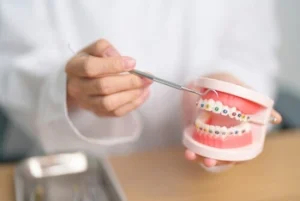 For most patients, the ache begins within the first few hours of having braces fitted. Patients report pain that peaks around 24 hours, which is when the most noticeable discomfort usually arrives, and it then drops markedly by the end of the first week.
How strong the initial discomfort feels varies widely, ranging from mild discomfort to a firmer ache, and depends on your individual situation. During this initial adjustment period, your teeth may feel sore when you bite. The upper front teeth are often the most tender, and patients tend to notice these teeth begin to shift first. This temporary soreness is a normal part of early tooth movement.
Does It Hurt Again After an Adjustment?
Soreness can return after a tightening appointment, because you may feel pressure on your teeth again once your dentist places a new or thicker wire. After an adjustment, soreness peaks around two days later and usually returns to baseline within a week. Pain can last longer than a week when your dentist introduces a stiffer wire material or elastics for the first time. With fixed braces, this ache is most often described as dull.
Soft Tissue Irritation, Gum Soreness and Food Choices
Sharp edges on brackets and wires can poke your gums, cheeks, lips and tongue, which can cause discomfort and leave sore spots on these soft tissues. Pressing a small piece of orthodontic wax over the bracket forms a smooth barrier while the area heals.
Braces also trap food particles and plaque around the brackets, which raises the chance of gum inflammation and sore gums when cleaning is missed. Hard and sticky foods can catch on braces and damage them. It also helps to limit sugary foods and drinks, including fruit juice and soft drinks, because they raise the risk of decay while braces make cleaning harder.
Managing Braces Pain at Home
Initial soreness is usually easily managed with simple home care, and managing pain often comes down to a few steps.
- Soft foods: For the first week, choose foods that require minimal chewing, such as soup or ice cream.
- Cold compress: Wrap a cold pack in a soft cloth and hold it against the outside of your cheek to help reduce inflammation and offer temporary relief.
- Salt water rinse: Dissolve a little salt in warm water, then swish gently around sore spots, which may help small cuts heal.
- Topical oral anaesthetics: A numbing gel applied to a sore spot can ease the discomfort for a short time. Follow the instructions on the packet.
- Acidic foods: Avoid acidic foods and drinks, such as citrus fruit and soft drinks, which can irritate sore areas in your mouth.
- Pain relief: Over-the-counter pain relief can help with reducing discomfort. Ask your dentist which type is suitable for you, and take it as directed on the label.
When Is Braces Pain Worth Checking?
 Braces soreness should ease with time, so it is worth contacting your dentist if something does not follow that pattern. Signs to look out for include:
- persistent pain or discomfort that is not getting better
- a wire or bracket that keeps poking your gums, cheeks, lips or tongue
- scratches or ulcers inside your mouth that are not settling.
Your dentist may be able to make adjustments to improve your comfort.
Talk to Riverlands Dental About Braces
Knowing when soreness is expected makes it easier to plan the first week of braces and the days after each adjustment. At Riverlands Dental, we offer traditional braces as well as Smilefast, which applies modern orthodontic technology to traditional braces and uses clear brackets with a tooth-coloured wire. Our dentists take the time to discuss your options fully before your braces journey begins. To talk through braces treatment, please call us on (02) 4501 7930.
Frequently Asked Questions
How often will I need appointments during braces treatment?
Braces treatment typically involves visiting your dentist every four to eight weeks, depending on the type of treatment you have. Smilefast is designed to keep these tightening appointments efficient.
Do Invisalign aligners hurt less than braces?
Pooled results from 28 studies found that patients with clear aligners reported less pain than patients with fixed braces, mostly in the early stage of treatment. The difference was modest, so individual experiences vary. We offer both Invisalign and braces, and your dentist can explain which suits your teeth and bite.
How long does it take to get used to braces?
The feeling of brackets against your lips and cheeks usually becomes familiar within about a month, as your mouth adapts and the inner cheeks toughen. By around six months, you may barely notice them.
Do braces hurt when they are taken off?
To remove braces, your dentist gently squeezes the base of each bracket with pliers to release the adhesive, then removes the leftover bonding material and polishes the tooth surface. Removal can cause some discomfort, but patients rate it lower than treatment soreness. Your dentist then takes an impression so a retainer can be made.
How should I clean my teeth with braces?
Brush twice a day for at least two minutes, and brush after meals when you can to clear food caught under the brackets and wires. If brushing is not possible, drinking a glass of water can help loosen trapped food, and a floss threader makes it easier to clean between your teeth.
References
https://www.healthdirect.gov.au/orthodontic-treatments
https://orthodonticsaustralia.org.au/why-do-your-braces-hurt/